Best overall for hosting: an estate with written wedding-event permission. Best for guest accommodation: coordinated rental homes. Best for privacy: a couple-only retreat. This 2026 guide compares rental arrangements by wedding role, so you choose accommodation without mistaking it for an authorized venue.
TL;DR
For luxury rentals la quinta for weddings, written event permission matters more than photographs or bedroom count.
Choose an event-approved estate for hosting; choose coordinated homes when guests need accommodation near a separate venue.
Consider La Quinta Retreat for your accommodation research; confirm wedding-related uses directly before committing.
Compare overnight occupancy, visitor rules, vendor access, and outdoor-use restrictions before signing.
Why this matters
A beautiful rental and a wedding venue are different purchases. Permission to sleep at a property does not establish permission to invite visitors, bring vendors, arrange a ceremony, or hold a reception.
For your 2026 shortlist, separate the accommodation decision from the event decision. Start with La Quinta Retreat when researching the property, then request written confirmation for your intended use rather than drawing conclusions from photographs.
La Quinta Retreat belongs on your accommodation shortlist, not your confirmed wedding-venue list, until event permission is documented. Apply that distinction to every property you consider.
What makes the best luxury rental for a La Quinta wedding?
Judge each option against these criteria before comparing interiors:
Use permission: Written authorization must match your actual plans, including preparations, visitors, vendors, and celebrations.
Overnight suitability: Confirm permitted occupancy, sleeping arrangements, bathrooms, and accessibility requirements for your guests.
Event logistics: Establish where vendors unload, guests arrive, vehicles park, and deliveries wait.
Outdoor restrictions: Ask about music, gathering areas, lighting, and required end times rather than assuming outdoor space is unrestricted.
Travel coordination: Compare the property's location with the ceremony, reception, and other scheduled commitments.
Contract clarity: Make sure the agreement describes approved activities and identifies the party responsible for authorizing them.
The strongest choice passes the permission test before the design test. A striking courtyard is irrelevant to your ceremony plans if the agreement excludes events.
Wedding rental options at a glance
These are ranked rental arrangements, not claims about specific properties. Each serves a different purpose; the first option wins only when you want the rental itself to host the wedding.
Event-approved estate
Best for: Ceremony and reception hosting
Standout advantage: Combines accommodation and an authorized event setting
Key limitation: Every planned activity needs approval
Coordinated rental homes
Best for: Guests attending a separate venue
Standout advantage: Separates guest lodging from event operations
Key limitation: Requires transport and room-assignment coordination
Gathering-approved home
Best for: A rehearsal meal or family welcome
Standout advantage: Gives a smaller gathering its own setting
Key limitation: Gathering permission does not authorize a wedding
Preparation-approved rental
Best for: Wedding-morning preparations
Standout advantage: Provides a dedicated base for getting ready
Key limitation: Visiting professionals and photography need confirmation
Couple-only retreat
Best for: Privacy before and after the wedding
Standout advantage: Keeps the couple's accommodation separate
Key limitation: Does not solve guest lodging or hosting needs
1. Event-approved estate: best for hosting the wedding
An event-approved estate is a rental whose written agreement expressly permits your intended wedding activities. It ranks first for hosting because accommodation and celebration can share a location—but only within the authorized scope.
Ask the owner or authorized manager to distinguish overnight occupants from daytime attendees. Then have your planner check whether the proposed ceremony, reception, catering, entertainment, and cleanup arrangements fit the agreement.
Event-approved estate pros:
Accommodation and approved celebrations share a setting.
The property can serve as a consistent base throughout the wedding schedule.
You can assess guest movement and vendor access together.
Event-approved estate cons:
Event authorization does not automatically cover every vendor or activity.
A residential layout requires scrutiny for guest circulation and service access.
Outdoor plans need an acceptable alternative if conditions change.
For 2026, request a property-specific event agreement rather than relying on a listing category or a verbal description. Ask who must obtain any required approvals and who can confirm that the proposed setup complies with applicable rules.
Best for: Couples who want their rental to function as the wedding location, not merely the place they sleep.
Verdict: Buy only when the written agreement covers your complete event plan; skip accommodation-only listings for hosting.
2. Coordinated rental homes: best for wedding guest accommodation
Coordinated rental homes place guests in separate properties while the ceremony and reception happen elsewhere. This arrangement keeps lodging decisions distinct from venue decisions and lets you group guests by household or travel needs.
Build the allocation around actual sleeping arrangements, not headline occupancy alone. A room that suits children sharing does not necessarily suit unrelated adults, and stairs or bathroom access deserve attention before assigning rooms.
Coordinated rental homes pros:
Different households can maintain separate routines.
Guests can be grouped around accessibility and sleeping needs.
The wedding venue remains responsible for its own event operations.
Coordinated rental homes cons:
Multiple addresses complicate pickups and communication.
Different properties can have different rules and check-in procedures.
Shared accommodation still requires agreement about rooms and common areas.
Create one guest-facing schedule with the correct pickup address for each household. Check arrival and departure arrangements before building wedding-weekend activities around access to the rentals.
For La Quinta Retreat wedding accommodation research, use the same checklist you apply elsewhere: authorized occupancy, room arrangements, visitor permission, and transport planning. Do not treat a lodging inquiry as an event authorization request unless you explicitly ask both questions.
Best for: Families and friend groups attending a wedding at a separate, confirmed venue.
Verdict: Buy for guest lodging when room assignments and transport work; skip this format if everyone must stay under one roof.
3. Gathering-approved home: best for a rehearsal or welcome meal
A gathering-approved home has express permission for a defined social occasion, such as a rehearsal meal or family welcome. That permission should specify the activity and attendees rather than using a broad phrase such as wedding weekend.
Keep this category separate from full wedding hosting. Approval for relatives to share a meal does not establish approval for amplified entertainment, a ceremony, outside catering, or a larger reception.
Gathering-approved home pros:
A welcome gathering can have a setting separate from the main venue.
Hosts can plan around a clearly defined guest group.
The occasion can remain focused on conversation and introductions.
Gathering-approved home cons:
Visitor limits can exclude people who are not staying overnight.
Caterers, deliveries, furniture, and cleanup need explicit coordination.
An outdoor dining area does not prove that gatherings are permitted.
Describe the meal exactly when requesting permission. Include whether food is delivered or prepared onsite, whether staff attend, where guests gather, and what happens after the meal ends.
For a 2026 rehearsal gathering, put the approved arrangement in the booking documents before sending invitations. That keeps the guest list tied to permission rather than making permission a problem after invitations go out.
Best for: Couples holding their wedding elsewhere who want a separately authorized family gathering.
Verdict: Buy for the specific approved gathering; skip any plan that depends on stretching the permission beyond its wording.
4. Preparation-approved rental: best for wedding-morning preparations
A preparation-approved rental serves as a base for dressing, hair and makeup, and other agreed wedding-morning activities. Its suitability depends on both the physical layout and permission for the people who will visit.
Review the spaces your group will actually use. Ask about mirrors, outlets, bathrooms, garment storage, and any restrictions affecting photography or the movement of furniture; verify details rather than assuming a luxury designation answers them.
Preparation-approved rental pros:
Preparations can happen away from the ceremony's setup activity.
Personal belongings can stay together during the morning.
A defined departure point helps organize transport.
Preparation-approved rental cons:
Stylists, photographers, and other professionals count as visitors to confirm.
An attractive interior does not guarantee a practical preparation layout.
Travel to the ceremony adds a separate departure task.
Give the property contact the full preparation schedule, including professional arrivals and the group's departure. Ask whether equipment, photography, and any proposed furniture movement require separate approval.
Best for: Couples who already have a venue but need an authorized, practical getting-ready base.
Verdict: Buy when visitor permission and the preparation layout both fit; skip properties chosen solely for photographs.
5. Couple-only retreat: best for privacy around the wedding
A couple-only retreat is accommodation reserved for the couple rather than the wider wedding group. Its role is narrow: provide a separate place to stay before or after the celebration.
This arrangement removes guest room assignments from the couple's own accommodation decision. It also requires clear communication that the property is not the default meeting point for relatives or the wedding party.
Couple-only retreat pros:
The couple controls their accommodation routine.
Guest lodging can be arranged independently.
The property does not need to serve every wedding-weekend function.
Couple-only retreat cons:
Guests need their own accommodation arrangements.
Getting-ready visits still require permission.
Travel between the rental and wedding activities remains part of the schedule.
Choose around your actual plans rather than adding requirements for activities that will happen elsewhere. If preparations, meals, and celebrations already have confirmed locations, evaluate the retreat as accommodation—not as an unofficial backup venue.
Best for: Couples prioritizing separation from group lodging and event activity.
Verdict: Buy for a private accommodation base; skip this format if you want constant access to the entire wedding party.
How we ranked these rental arrangements
The ranking follows wedding function: hosting first, guest accommodation second, then specific supporting uses. Permission takes priority over appearance because a property cannot serve a role its agreement excludes.
This is not a scored review of individual properties. Compare actual rentals against the criteria above, then move the arrangement that matches your needs to the top of your own shortlist.
Get these confirmations before committing
Use 3 written checks to keep the decision clear:
Use permission: Describe every intended activity, including visitors and professional services.
Guest logistics: Confirm overnight occupancy, daytime attendance, parking, access, and transport arrangements.
Contract match: Check that the agreement reflects the approved plan and identifies any remaining conditions.
These checks apply whether you need a ceremony location or simply somewhere to sleep. Send the same description to each property so you compare answers to the same request.
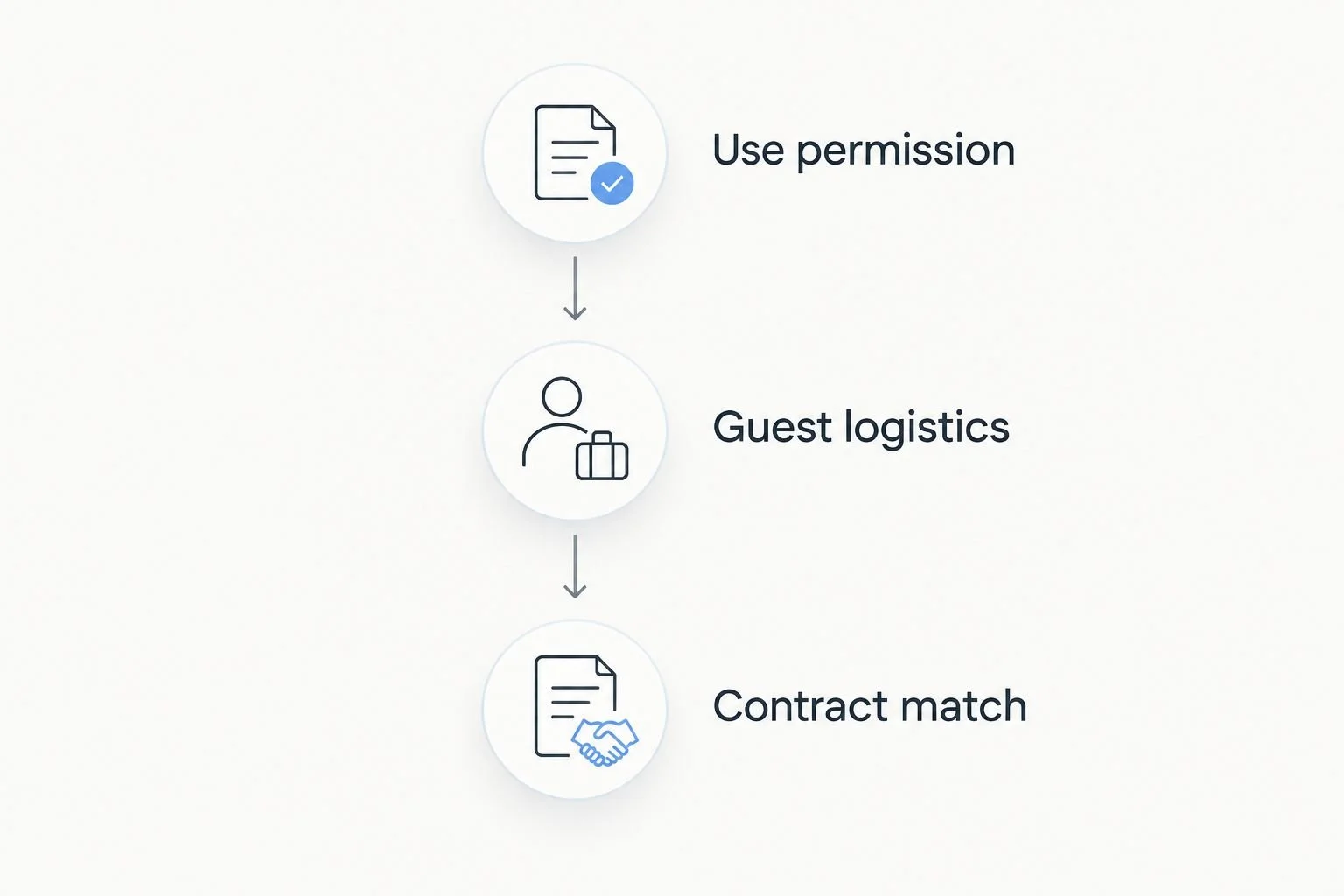
Confirm the intended use before treating a rental as part of the wedding plan.
Keep 2 separate guest lists if the property will host visitors: overnight occupants and daytime attendees. This is a planning method, not a statement about any property's permitted capacity; submit both lists for confirmation.
Which rental arrangement should you choose?
Choose an event-approved estate if hosting is the requirement. Choose coordinated homes if accommodation is the requirement. The remaining arrangements solve narrower needs and should not substitute for a confirmed venue.
For 2026, keep your shortlist organized by purpose before comparing properties. A rental that suits a private stay can be the wrong choice for preparations, while a preparation base can be unsuitable for a welcome meal.
When evaluating La Quinta Retreat luxury rentals for weddings, ask about your exact intended role. A precise request produces a more useful answer than asking whether a property is wedding-friendly.
FAQ
What's the best type of luxury rental in La Quinta for a wedding?
An estate with written wedding-event permission is the best rental type when you want to host the ceremony or reception onsite. If you only need accommodation, coordinated rental homes serve a different and more relevant purpose.
Can I hold a wedding at any luxury vacation rental?
No—an accommodation reservation does not establish permission to hold a wedding. Obtain written authorization for your planned event and confirm responsibility for any required approvals.
Is one large estate better than separate homes for wedding guests?
One estate suits a shared-location plan, while separate homes suit households needing independent accommodation. Compare permitted use, sleeping arrangements, and transport rather than assuming either format is universally better.
Can my hair stylist and photographer come to the rental?
Confirm visiting professionals with the owner or authorized manager before scheduling them. Include their activities, equipment, arrival arrangements, and any photography requirements in the request.
Does approval for a rehearsal dinner include the wedding reception?
No—permission for a rehearsal dinner does not establish permission for a reception. Request authorization for each occasion and its specific activities.
What should I confirm with La Quinta Retreat before booking?
Confirm the property's suitability for your exact accommodation and wedding-related plans directly. Ask about occupancy, visitors, professional services, and whether the agreement authorizes every intended activity.
How should I compare wedding rental costs?
Compare written quotes covering the same accommodation and approved activities. Ask each provider to identify what the agreement includes and any separately charged requirements, rather than comparing unlike bookings.
One last thing
Ask this question before paying: Does the written agreement describe the day you are actually planning? A booking that permits accommodation but excludes your planned visitors is not a match, regardless of how closely the photographs resemble your wedding vision.